
The Rental Paradox
Why Occupancy Should Be Every Developer’s KPI

TL;DR
There is a growing gap between what is demanded and what is being constructed.
The strongest rental demand sits in the $70–$200 range (UGX 300,000–750,000) where units fill within days.
Many new developments are priced at $400–$1,000+ (UGX 1.5M–3.8M) targeting an income segment that represents only a small fraction of real demand.
Prime residential occupancy has fallen to around 80%, and rents for two-bedroom units have dropped by 7%, showing price sensitivity and slower uptake.
Vacancy cycles are stretching in higher-price segments, and every empty month destroys more revenue than charging a lower but sustainable price.
The future belongs to developers who build for occupancy guided by real-time data instead of assumptions.
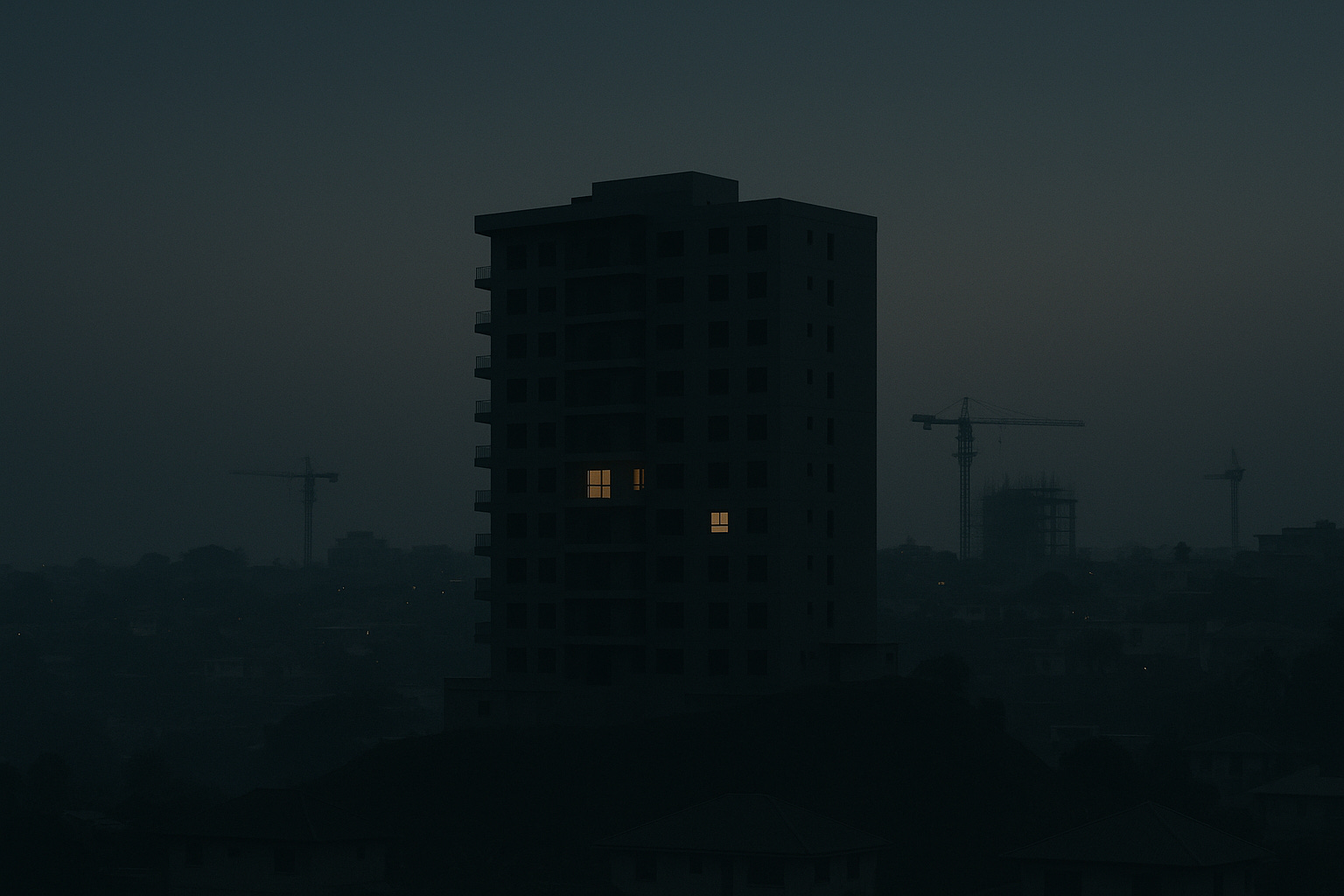
I was sitting on the balcony of a friend’s apartment on one of Kampala’s hills when something caught my eye. Across the valley stood a new twelve-story apartment building (yes, I counted the floors), and the launch banner was still hanging proudly with the words “Rentals Available.”
But only two apartments had lights on.
I asked my friend what the story was. He shrugged and said, “It’s been like that since they finished it. About six months now.”
A few weeks later I was speaking with Bruce, the co-founder of Rentify, one of the startups in the StartHub Africa portfolio. Rentify has helped connect more than a thousand tenants to homes this year alone, giving them a real-time view of how the rental market actually behaves on the ground. We were reviewing their occupancy data and analyzing how long different units take to find tenants. The strongest rental demand sits between seventy dollars (about UGX 300,000) and two hundred dollars (around UGX 750,000). That is where the tenant flow is most active around the city.
Yet building after building appearing across the city is priced at four hundred, six hundred, or even a thousand dollars and above. These units are being built for an income segment that represents only a tiny fraction of the real market. And that is the paradox I see in Kampala’s housing landscape today. The demand for housing is undeniably high, but units sit empty for months, tenants move out frequently, and it takes far too long to secure the next occupant.
And when you zoom out, the macro picture reflects the same misalignment. According to the Knight Frank Kampala Property Market Review for the first half of 2025, prime residential occupancy has fallen to 80%, and rents for two-bedroom units have dropped by 7% as supply outpaces demand and tenant price sensitivity increases. At the same time, more than 1,200 new apartment units are still in the pipeline, raising questions about who these developments are actually meant to serve.
This writing explores the gap between what is being built and what the market can actually absorb. It is a reflection on what we witness every day in the city (buildings rising faster than they can be filled) and an argument for data-driven decision-making over optimistic assumptions. If we want to build cities where the lights stay on, we need to listen to the numbers and the people behind them.
Zooming Out: The Macro Reality
When you step back from one empty building and look at the wider system, you can see the majority of households in Kampala are already stretched thin. Income is limited, and most of it goes to essentials like food, transport, school fees, and healthcare. After these priorities, there is very little left for housing priced at levels far above reach. Yet a growing portion of new apartments I see across the city are priced well beyond what most earners can realistically afford.
The Knight Frank Kampala Property Market Performance Review report also highlights a shift toward secondary suburbs, which have experienced growth in mid-market apartment developments and rising demand for more affordable and strategically located alternatives as price sensitivity increases. Some secondary areas even recorded occupancy and rental improvement, unlike prime neighborhoods, suggesting a rebalancing of demand based on affordability and a growing supply of one-bedroom listings
It made me question how many developers actually research their potential tenants before calculating projected returns and payback periods. I remember sitting in an engineering class where we were taught to calculate the payback period for housing investments, but not once did we consider the actual tenant. We calculated costs, interest, and timelines, but we never calculated the human reality of who could pay.
So the challenge is not a lack of demand for housing. The challenge is that we are building the wrong type of housing in the wrong places at the wrong prices. So we need to align development decisions with real data and real people.
What Rentify Sees on the Ground
Rentify has helped connect more than a thousand households to homes this year, supporting both tenants and property owners. They have had a front-row seat to the real dynamics of Kampala’s rental market, watching demand shift in real time.
What they consistently see is that the strongest demand sits between Seventy and two hundred dollars per month. Units in this range move fast. They can be taken within days, sometimes within hours. Tenants move urgently because life changes quickly. Jobs shift, schools change, families reorganize, and decisions are made under pressure. In this price band, vacancies rarely linger.
But on the other side of the spectrum, units priced between four hundred and one thousand dollars and above move slowly. Tenants who can afford these amounts have options and negotiate hard. Amenities like road access, supermarkets, gyms, rooftop terraces, and imported fittings become differentiators, not necessities. Vacancy cycles stretch from three months to more than a year in some cases.
It makes me wonder why more developers do not sit down with platforms like Rentify before breaking ground. Real-time movement patterns, location data, pricing behavior, and vacancy insights are available. The information exists. Yet many developments still move forward blindly, guided more by assumption than evidence. Somebody should really talk to Rentify. If you go, tell them Noah sent you so they give me a commission (help a brother out).
What Rentals Reveal About Property Owners and Income Reality
One overlooked truth in Kampala’s housing story is what rental patterns reveal about the financial position of property owners themselves. The majority of landlords in this city are not large institutional developers. They are individuals who have saved for years, built slowly, borrowed from SACCOs, used family land, or constructed with hopes that rental income would provide stability. Very few people purchase ready apartments. Most build room by room, floor by floor, often over many years.
And here is something that matters. On average, tenants stay in a property for only about one year. That means every vacancy month eats directly into annual income. If a unit takes two or three months to replace the outgoing tenant, that is already twenty to thirty percent of potential revenue lost before considering maintenance, utilities, caretaker fees, repairs, taxes, and especially loan repayments for those who borrowed to build.
Real returns are not based on perfect conditions; they depend on occupancy consistency. If a landlord built expecting full occupancy to cover a bank loan or SACCO repayment and instead faces a three-month vacancy cycle, the economics collapse fast. The property stops being an asset and becomes a liability.
For example, a unit priced at three hundred dollars (UGX 1,000,000) per month loses three million shillings in revenue for every quarter that it sits empty. If the same unit is priced at two hundred and twenty dollars (UGX 800,000) but stays occupied throughout the year, the owner earns more in total cash flow. Yet many developers chase premium pricing instead of sustainable occupancy.
What Developers Should Consider
If occupancy is the real measure of success, then the future of property development in Kampala must be grounded in data, not assumptions. Every decision from land purchase to pricing should be informed by how people actually move, live, and pay.
1. Understand Where Demand Is Flowing
Tenants are moving further from the city center in search of affordability, a shift driven by income constraints rather than preference. But that movement comes with trade-offs in transport cost, time, and access to work, schools, and services. Developers need to study where people are going, why they are going there, and what price points convert, rather than relying on location prestige or assumed demand.
2. Model Cash Flow Against Real Occupancy
Tenants stay for an average of about one year. Any vacancy period of two or three months can wipe out thirty percent of potential annual revenue before costs, maintenance, and loan repayment are factored in. A unit rented at a lower monthly price but consistently occupied generates more actual cash flow than a premium unit sitting empty. Sustainable return comes from occupancy, not from the highest theoretical rent.
3. Use Real-Time Market Data
Platforms like Rentify place more than a thousand households annually. They know which neighborhoods fill fastest, which price points stagnate, how long units sit empty, and what tenants prioritize. This is the type of data that should guide development decisions. Building without engaging real-time market insight is not investment; it is gambling.
Example:
In areas like Bukoto, many newly built apartments priced at more than four hundred dollars (UGX 1,500,000) take months to find occupants, while simple self-contained single rooms priced around five hundred thousand can fill in less than forty-eight hours. These lower-priced units move faster, require less marketing, reduce management overhead, and do not demand large parking allocations since most tenants in this bracket do not drive. A block of six such units can generate the same three million shillings per month as one high-end apartment, but with steadier cash flow and far lower risk. This is the type of insight Rentify sees daily, proving that the market is not rejecting housing; it is rejecting pricing that ignores real income levels.
And to be clear, this is not to say that some premium developments are not making money or that all high-end projects are misplaced. They can be well planned, profitable, and serve important market segments. The point is simply that the numbers and the patterns are shifting, and ignoring them has real consequences. If we build with data, we can create a housing market that works for investors, landlords, and the people who actually live in these cities.
If you want to understand where the market is going, start with the numbers and listen to the behavior they reveal. The answers are already in how people move, what they choose, and what they can afford. And when in doubt, speak to the people who manage these realities every day. Rentify is one call away. Build for occupancy, not assumption, and the lights will stay on.
Credits
Huge appreciation to:
Bruce from Rentify for sharing real on-ground occupancy insights and the work you do helping thousands of tenants find homes each year.
Ham from StartHub Africa for conversations that helped shape thinking around property economics, Titl learnings, and real estate realities.
Knight Frank Uganda for the Kampala Property Market Performance Review H1 2025, which offered valuable macro perspective on shifting demand and pricing trends.